


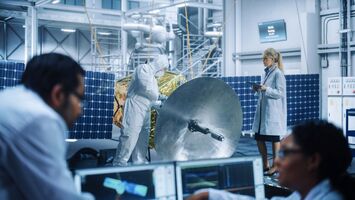
When a pharmaceutical production line runs without incident, the person who spent weeks fine-tuning every parameter rarely gets a mention. That is the reality of the process engineer: a behind-the-scenes role, strategically central, and one Switzerland simply cannot do without. Between Basel, the Lake Geneva arc and the Mittelland, chemical, pharmaceutical and biotech sites recruit these profiles continuously. Demand shows no sign of easing heading into 2026. At Fed Group, through our Fed Engineering division, we support candidates and industrial companies across French-speaking Switzerland daily: the figures below reflect what we see on the ground, cross-checked against jobs.ch and specialist salary guides.
What a process engineer actually does in 2026
The role is frequently misunderstood — sometimes confused with production engineer, project manager or quality specialist. The distinction is clear: the process engineer is the specialist in industrial-scale material transformation. Where a chemist controls a reaction in a laboratory flask, the process engineer designs, sizes and makes reliable the complete system that will reproduce that reaction thousands of times, safely, repeatably and profitably. The thinking is in flow rates, mass and energy balances, cycle times, yields.
In practice: the process engineer is the person who moves a molecule from laboratory discovery to industrially manufactured, compliant and economically viable product. In Swiss chemistry and pharma, this covers process development, scale-up industrialisation, optimisation of existing lines, regulatory validation, and production technical support.
On the ground, the office/shop-floor split varies enormously by role. A development engineer spends significant time at the pilot plant and in data analysis; a production support engineer works at the pace of the lines, solving problems in real time. Both profiles have real market value — but they are valued differently, and the distinction matters when negotiating.
Why is this profile so sought-after in Switzerland?
Because it sits exactly where value is created and risk is concentrated. A poorly controlled process means collapsing yields, non-conforming batches, costly production stoppages, or worse — an HSE incident. Conversely, a few percentage points of yield improvement on a high-value active pharmaceutical ingredient can represent millions of francs. In a country where labour costs are high and competitiveness is built on quality and innovation rather than volume, process engineering is not a luxury — it is a condition of industrial survival.
The Swiss pharma-chem-biotech market: regions and employers
Switzerland holds a singular position in the global life sciences industry. The chemistry, pharma and biotech sector accounts for over 40 % of Swiss exports. For current, authoritative sector figures, the reference sources are scienceindustries, Interpharma and the Swiss Federal Statistical Office (FSO).
| Region / Canton | Dominant specialisations | Employer profile | Our market read |
| Basel (Basel region) | Pharma, fine chemicals, life sciences | Pharma multinationals, speciality chemistry, contract manufacturers | The historical core; German is often required for operational roles |
| Lake Geneva arc (GE, VD) | Biotech, pharma, medical devices, cosmetics | Growing biotech firms, CDMOs, regional HQs, EPFL spin-offs | Strong tension on bioprocess profiles; natural entry point for Francophone candidates |
| Neuchâtel / Jura arc | Microtechnology, medtech, precision chemistry | High-tech SMEs, medtech, precision subcontractors | Less visible but high density of SMEs needing versatile process profiles |
| Valais | Heavy chemicals, energy, active ingredients | Chemical production sites, large industrial groups | Narrower market but low competition; competitive salaries for bulk chemistry profiles |
| Zurich / German-speaking Switzerland | Pharma, chemicals, food, production technologies | Large groups, mid-size industrials, ETHZ spin-offs | Highest salaries, but German is essential |
Our position at Fed Group: for Francophone candidates without strong German, the Lake Geneva arc concentrates the bulk of opportunities — and the biotech dynamic is creating roles the market cannot fill fast enough. Basel is accessible with strong English, but German remains the differentiator for operational and management positions.
Process engineer salaries in Switzerland in 2026: verified CHF figures
This is the central question — and one where approximations circulate most freely. What follows are sourced figures, not guesses.
Salary grid by level and sector (2026)
| Level | Experience | Pharma / Biotech (CHF/year gross) | Chemical / Medtech (CHF/year gross) |
| Junior | 0–3 years | 85,000 – 105,000 | 78,000 – 95,000 |
| Confirmed | 3–7 years | 105,000 – 135,000 | 95,000 – 120,000 |
| Senior / expert | 7–12 years | 130,000 – 160,000 | 115,000 – 145,000 |
| Project manager / management | 10+ years | 150,000 – 200,000+ | 135,000 – 175,000 |
Sources: jobs.ch (chemical engineer CH: CHF 86,000 average, 317 entries; pharmaceutical engineer CHF 81,300 average, 184 entries — 2025–2026 data); fed-group.ch engineer salary guide Switzerland 2026 (pharma junior process: 95–110k, confirmed: 125–150k); Robert Walters Salary Guide 2025.
Three essential reference points. First: the 13th-month salary is standard practice in Switzerland — always check whether an offer includes it. Second: region shifts the ranges by ±15 % (Basel/Zurich at the top, rural cantons below). Third: rare specialisation — bioprocesses, GMP validation, continuous processes — is the most powerful salary lever, well ahead of seniority alone.
Concrete example: confirmed profile, Lake Geneva region
Take Lucie, 34, process engineer at a Vaud-based CDMO specialising in fine chemistry. Five years' experience, GMP and scale-up competencies, Aspen Plus proficiency:
- Gross salary: CHF 118,000/year (CHF 9,077/month × 13)
- AVS/AI/APG employee contributions (~5.3 %): –CHF 6,254
- Unemployment insurance (2.2 %): –CHF 2,596
- LPP 2nd pillar employee share (~8 %): –CHF 9,440
- Source tax, Vaud, single, estimated rate ~17 %: –CHF 17,102
- Estimated net: approximately CHF 82,600/year → CHF 6,350/month
This is an indicative calculation — LPP rates vary by pension fund. But it shows the reality: a solid Vaud gross salary holds up well net. To understand what your offer is really worth, see our article on gross and net salary in Switzerland.
Training and skills: what actually opens doors
The Swiss market values both academic level and hands-on mastery. In process engineering, the EPF/HES distinction is less marked than in other fields: both pathways are respected, provided the competence is genuine.
Recognised qualifications on the Swiss market
- Master's in chemical engineering or process engineering — from EPFL or ETH Zurich for the strongest academic signal
- HES diploma / Bachelor's in engineering (chemical engineering, industrial technologies) — highly valued for its practical orientation
- PhD in process engineering or biotechnology — differentiating for R&D and process development roles
- Complementary training: pharmaceutical engineering, bioprocesses, GMP, project management
For foreign qualifications, recognition by SBFI (SEFRI) may be required. EU/EFTA qualifications (Master's / Bac+5) are generally automatically recognised under the Bologna agreements for private sector roles.
Technical skills: what creates a pay differential in 2026
| Skill | 2026 status | Field commentary |
| Process engineering & unit operations | Non-negotiable foundation | Without it, nothing else holds — the baseline recruiters assume |
| GMP / GxP & process validation | Essential (pharma) | Expected from junior level in regulated environments |
| Process simulation (Aspen Plus, Pro/II) | Confirmed standard | Do not be blocked by acronyms — process logic matters more than the specific tool |
| Data analytics & statistics | Rising fast | Intermediate Python / R / Minitab expected in new postings |
| Bioprocesses (fermentation, cell culture) | Scarce and differentiating | Demand clearly exceeds supply — visible salary premium |
| AI / ML applied to processes | Emerging → differentiating | Less rare than two years ago, but operational mastery remains premium |
| Green processes & energy efficiency | Driven by regulation | No longer a nice-to-have — Swiss sites have real CO₂ reduction targets |
| HAZOP / process safety (HSE, ATEX) | Essential in heavy chemistry | Often missing from CVs — genuine differentiator on high-risk sites |
On languages: English is the de facto standard in the vast majority of Swiss pharma environments. French covers French-speaking Switzerland. But German — even passive reading level — opens Basel and all of German-speaking Switzerland. A trilingual process engineer (FR/EN/DE) holds a concrete, remunerated advantage the market recognises explicitly.
Trends reshaping the role by end of 2026
Five concrete dynamics, not vague trends:
1 — The connected factory and digital twin
IoT sensors, MES systems interconnected with ERPs, digital twins enabling process simulation before any physical modification: the process engineer now handles far more data than five years ago. This is already operational reality at Basel and Lake Geneva sites since 2023. Industrial cybersecurity is emerging as a secondary concern as shop floors get connected.
2 — AI as optimisation tool, not threat
Machine learning identifies correlations invisible to the human eye in production data, predicts quality deviations before they occur, and optimises multidimensional process parameters. Predictive maintenance and algorithm-assisted quality control are already live on several Swiss sites. Our view: the process engineer remains the guarantor of physical common sense — a model can be wrong, thermodynamic laws cannot.
3 — Green processes: no longer optional
Regulatory pressure and ESG commitments from major groups are pushing process engineers to the front line on energy consumption reduction, waste minimisation, and solvent substitution. An engineer who integrates these dimensions from process design onwards delivers measurable strategic value. This is moving from CV advantage to pre-selection criterion on certain roles.
4 — Bioprocesses: the highest-return career bet
The growth of biopharmaceuticals, gene and cell therapies, and vaccines is driving strong demand for bioprocess profiles (fermentation, cell culture, bioreactors, purification). This is the specialisation with the highest salary premium in 2026, particularly in the Lake Geneva region. The engineering specialisations that are holding strong in Switzerland are precisely those combining process knowledge with biology — a combination still rare on the market.
5 — Talent shortage is here to stay
Demand for qualified process engineers structurally exceeds supply — this is not a cyclical phenomenon. For candidates, it is a favourable negotiating position. For companies, it is an incentive to invest in internal training and to pay serious attention to the candidate experience. This tension explains why PhD-to-industry transitions have become so attractive to recruiters over the past two years.
Career paths: the real trajectories and which ones pay best
Process engineers have unusually flexible career trajectories. Five main paths, with an honest read on each:
- Technical expertise: becoming the recognised authority on a specific domain (bioprocesses, validation, HAZOP). Ideal for those who want technical depth without managing people — and in Switzerland, pure expertise is better compensated than in most of Europe.
- Project management: project manager, then portfolio manager. Growing budgetary and organisational accountability. Higher ceiling, different mental load.
- Team management: process department head or production unit manager, up to technical director roles.
- R&D / process development: focus on innovation and new process development, often linked to a doctoral background or biotech expertise.
- Consulting / entrepreneurship: joining an engineering firm or going independent. Attractive for experienced profiles wanting more autonomy and multi-sector exposure.
Our observation: engineers who progress fastest tend to combine 2–3 years in production (understanding the ground reality), a period in development or project management, then a targeted specialisation. This hybrid path is what the best roles demand — and what recruiters actually prefer to see.
Landing on the Swiss market: what actually makes a difference
CV and applications: Swiss conventions
- Concise CV (2 pages maximum), with quantified results on your projects (yield improvements, deadlines met, cost savings generated)
- Professional photo — standard practice in Switzerland, do not omit it
- Status clearly stated (nationality, existing permit type if applicable)
- Languages honestly indicated (CEFR reference level preferred)
- Keywords aligned with the role: GMP, scale-up, validation, bioprocesses, HAZOP, process simulation
- Foreign qualifications: indicate SBFI equivalence if it exists
- Work certificates (« Arbeitszeugnis ») to be prepared — they carry specific weight in Switzerland
Legal and administrative aspects
EU/EFTA nationals: free movement, simplified procedures. Non-EU/EFTA nationals: structured process requiring a firm job offer and demonstration that no local or EU/EFTA candidate was available. SBFI qualification recognition may be required. Always verify with the relevant canton — rules evolve.
Networking and recruitment
A significant share of Swiss positions is filled via networks and direct approaches. Relevant professional associations: scienceindustries, Interpharma, SSIC (Swiss Society of Chemical Engineers). LinkedIn is effective, but working with a specialist recruiter gives access to unpublished roles — particularly in pharma and biotech, where discretion in hiring is the norm. Our Fed Engineering consultants have a detailed view of the ranges being paid and the opportunities not yet on the market in French-speaking Switzerland. Whether you are looking for a permanent role, a temporary assignment or a consulting mandate, let us talk about your project.
Read also
- Engineer salary in Switzerland: sectoral, regional analysis and 2026 trends
- Engineer of the future in Switzerland: which specialisations survive and which disappear?
- Engineer shortage in Switzerland 2026: what the Adecco index has just changed
- Starting engineer salary in Switzerland: what you can really earn in 2026
- Gross and net salary in Switzerland: how to calculate what you actually take home
FAQ: process engineer in Switzerland
What is the average process engineer salary in Switzerland in 2026?
In pharma/biotech, a confirmed profile (3–7 years) sits between CHF 105,000 and 135,000 gross per year according to jobs.ch and Fed Group field data. Juniors start at CHF 85–105,000; seniors reach CHF 130–160,000. Pharma pays 15–25 % above the industrial average.
Which specialisation offers the best salary premium in 2026?
Bioprocesses (fermentation, cell culture, purification) generate the highest premium. A profile combining GMP + bioprocesses + data analytics can negotiate 10–20 % above an equivalent generalist in the Lake Geneva region and Basel area, where demand clearly outstrips supply.
Is German necessary to work as a process engineer in Switzerland?
In French-speaking Switzerland, no — French and English cover the vast majority of roles. German becomes essential to access Basel (the pharma heartland) and German-speaking Switzerland, and represents a concrete, remunerated differentiator across the national market.
Are foreign qualifications (French, Belgian, etc. engineering degrees) recognised in Switzerland?
For the private sector, EU/EFTA qualifications (Master's, Bac+5) are automatically recognised under the Bologna agreements. For specific situations, formal SBFI recognition may be required. In practice, technical competence and English proficiency are what drive selection decisions.
What is the difference between Big Pharma and a CDMO for a process engineer?
Big Pharma: highly structured processes, strong GMP requirements, deep specialisation, mapped career tracks. CDMO: wide variety of client projects, fast skill development, versatility — but generally less stability and training budget. Fed Group recommendation: start at a CDMO to diversify experience, then join a large site to specialise and stabilise.
Useful Resources
- Swissmedic — Authorisation of pharmaceutical manufacturing sites in Switzerland
- SBFI — Recognition of foreign qualifications in Switzerland
- scienceindustries — Key figures for Switzerland's chemistry, pharma and biotech industry
Sources: jobs.ch (chemical engineer CH, 317 entries; pharmaceutical engineer, 184 entries — 2025–2026 data); fed-group.ch Engineer Salary Guide Switzerland 2026; Robert Walters Engineering Salary Guide Switzerland 2025; Fed Engineering field data, French-speaking Switzerland.