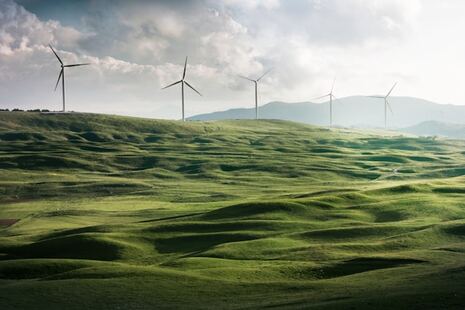



An impact study for a wind farm in the Vaud Jura, the clean-up of a contaminated site in Monthey, the restoration of a stretch of the Broye river, the carbon footprint of a Zurich industrial group: four assignments, four different employers, one job title. The environmental engineer is a broad profession in Switzerland, built on dense federal law and on cantons that each apply their own ordinances. This profile describes the job as our clients recruit for it, the training paths that lead to it, the 2026 salary ranges, and how the climate laws in force since 2025 are shifting demand.
Key points
- The job is split between engineering consultancies (the largest source of positions), cantonal and federal administrations, industry and major project owners. Tasks and pay differ a great deal from one employer to the next.
- 2026 ranges: CHF 75,000 to 85,000 gross a year at entry, CHF 87,000 on average across all profiles (jobs.ch, 270 salaries), CHF 100,000 to 125,000 for an experienced project manager in a consultancy or the public sector.
- The Climate and Innovation Act and the revised CO2 Act, both in force since 1 January 2025, create lasting demand for carbon accounting, building energy retrofits and climate adaptation.
The job, employer by employer
The word "environment" covers positions in Switzerland that have little in common. The table below follows the line that matters most to a candidate: who signs the contract.
| Employer | What the engineer does | Swiss examples | Share of the recruitments we handle |
| Engineering consultancies | Environmental impact assessments (EIA), impact notices, environmental site supervision, permit files, soil and water surveys | CSD, BG, Ecoscan, Impact-Concept, Biol-Conseils, Swiss branches of large groups | Around half |
| Cantonal and municipal administrations | Reviewing files, inspection, planning and master plans, water and watercourse management, contaminated sites, spatial planning | Environment departments (DGE Vaud, OCEV Geneva, AWEL Zurich), water services | A quarter, mostly permanent positions |
| Industry and energy | OPAM, OPair and OEaux compliance, carbon footprints, ISO 14001, sustainability audits, waste and discharge management | Basel chemicals and pharma, cement works, energy utilities, industrial wastewater plants | One in six |
| Project owners and infrastructure | Environmental component of major projects, coordination with the authorities | SBB, FEDRO, airports, property developers | The rest, with NGOs and research |
In a consultancy, the engineer bills their time, answers public tenders and works on ten files at once. In the administration, they review the files the consultancy wrote and decide. Moving between the two is common and happens in both directions; the second job, around 30, is often where people choose their side. The neighbouring field of habitat restoration is covered in our article on the engineer of the future in Switzerland.
The federal legal framework, and what it actually makes you do
No other engineering profession is defined so completely by law. The Federal Act on the Protection of the Environment (EPA, SR 814.01) is the trunk; a dozen ordinances are its branches, and each one corresponds to a task the engineer really performs.
- OEIE, the ordinance on environmental impact assessment. Sets the list of installations subject to an EIA (roads, wind farms, gravel pits, wastewater plants, industrial installations above thresholds). The impact report is the consultancy's standard product.
- OPair and OPB. Air quality and noise. Measurements, immission modelling, road noise registers for municipalities.
- LEaux and OEaux. Water protection, space reserved for watercourses, restorations: the 2011 revision sets the target of restoring 4,000 km of watercourses in 80 years, i.e. 50 km a year; the actual pace is around 18 km a year, which guarantees work for consultancies and cantonal services for decades.
- OSites and OSol. Contaminated sites and soils. Historical and technical investigation, remediation, cantonal register of polluted sites.
- OLED. Waste, including excavated material, the country's largest waste stream.
- OPAM. Major accidents: summary reports for companies handling dangerous substances, linked to HSE functions.
- CO2 Act and Climate and Innovation Act. In force since 1 January 2025: a 50% emissions reduction by 2030 against 1990, net zero by 2050, with federal funding for building retrofits and CO2 reduction technologies.
Federalism adds a layer: each canton has its implementing law and its own practices. An engineer moving from Geneva to Zurich relearns the forms, not the law. In an interview, a candidate who can cite the OEIE article that triggered the impact assessment on their last project is a step ahead of one who talks about "environmental regulations" in general.
Training: the paths that lead to the job
The title is not protected, but the market reads diplomas precisely. The two federal institutes of technology supply the analysis and modelling profiles; the universities of applied sciences (HES) supply the field and site profiles; the universities, the natural sciences profiles. All three meet in consultancies.
| Path | Institutions | Length and title | What it brings | Where it most often leads |
| Environmental sciences and engineering | EPFL (SIE section), ETH Zurich (Umweltingenieurwissenschaften) | 3-year bachelor + 2-year master, EPF engineer | Modelling, hydrology, water and air treatment, systems analysis | Large consultancies, industry, research, federal offices |
| Environmental engineering, HES | ZHAW Wädenswil (Umweltingenieurwesen), HEPIA Geneva (nature management), HEIA-FR and HEIG-VD (civil engineering, environment track) | 3-year bachelor, part-time possible | Fieldwork, measurements, sites, GIS, habitat management | Consultancies, cantonal administrations, municipalities |
| Environmental sciences, university | UNIL (geosciences and environment), UNIGE (MUSE), Bern, Basel, Zurich | Bachelor + master, 5 years | Ecology, geography, climate, public policy | Administrations, NGOs, sustainability consulting |
| Career change while working | CAS and DAS from HES and universities (water management, climate, sustainability), federal diploma in nature and environment | 6 to 18 months | Add-on for a civil engineer, a chemist or a geographer | Change of direction without going back to full-time study |
A civil engineer who wants to move into environment does not need a second master's: a CAS in water management or planning and two years on EIA files are enough, and the dual skill set is sought after by consultancies that handle infrastructure. Our profile of the civil engineer in Switzerland describes the starting point of that bridge. For foreign graduates, equivalence goes through SERI for HES degrees and is decided above all on knowledge of Swiss law, which employers test from the first interview.
Skills: what separates two equivalent CVs
Adverts ask for everything. On our assignments, the decision comes down to a small number of points, listed here in the order recruiters check them.
- Knowledge of federal law and its cantonal practice. It is the first technical question in the interview and the one that eliminates the most candidates from abroad.
- A mastered GIS. QGIS or ArcGIS, with cantonal and federal geodata (swisstopo, registers). A thirty-minute practical test is common in consultancies.
- Writing. An impact report runs to 200 pages and must be understood by a municipal councillor. Candidates who write badly do not get through, whatever their training.
- Languages. French is enough in French-speaking administrations; German is indispensable for federal offices, national consultancies and Basel or Zurich industry. English matters little, except in research and industrial groups.
- A specialist tool. Hydraulic modelling (HEC-RAS, BASEMENT), acoustics (CadnaA), carbon accounting (GHG Protocol methods, ecoinvent database), air quality. One specialism mastered is worth more than five touched on.
Two qualities then come up in every interview debrief: the ability to defend a report to an unhappy developer, and the ability to hold a night shift on site when environmental supervision requires it.
2026 salaries: what the Swiss market pays
Public calculators give an average that flattens the gaps between employers. We cross-check them against our assignments to separate the levels as they are actually paid. Basis: jobs.ch (270 salaries, average CHF 87,000, from CHF 81,737 at entry to CHF 123,000 beyond twenty years' experience), Lohncheck 2026 (range CHF 74,741 to 100,308), and our 2025-2026 placements.
| Level | Consultancy, French-speaking Switzerland | Cantonal or federal administration | Industry and energy |
| Entry level, 0-3 years | 72,000 – 82,000 | 78,000 – 88,000 | 80,000 – 90,000 |
| Experienced, 3-8 years, project manager | 85,000 – 100,000 | 95,000 – 115,000 | 100,000 – 120,000 |
| Senior, head of discipline or team | 100,000 – 125,000 | 115,000 – 140,000 | 120,000 – 145,000 |
| Partner, head of department, group environment manager | 130,000 – 160,000 plus equity | 140,000 – 170,000 | 150,000 – 190,000 |
Amounts in CHF gross per year, 13th salary included, bonus excluded. Consultancies pay the least early on and train the most; the administration pays better from the start and caps by salary class; industry pays best and hires least. jobs.ch places Zurich and Vaud at the same level (CHF 87,000): in this profession the canton matters less than the employer, unlike most engineering roles.
Take Nadia Ferreira, 29, EPFL master's in environmental sciences and engineering, four years at a Lausanne consultancy where she became an EIA project manager at CHF 88,000. The Canton of Vaud advertises a scientific officer position at the DGE in class 10, whose 2026 scale runs from CHF 83,450 to 121,002 including the 13th salary; with her experience she is hired at CHF 104,000. The move earns her CHF 16,000 gross a year, CHF 1,230 a month and CHF 1,090 after social contributions, before her municipality's tax, with progression then capped by the class ceiling. It is the calculation most consultancy engineers make around 30, and it explains why consultancies struggle to keep their project managers. The reading grid by canton and sector is in our article on engineer salaries in Switzerland.
What the 2025 laws change in demand
Three laws entered into force on 1 January 2025: the Climate and Innovation Act, the revised CO2 Act and the Act on a Secure Electricity Supply. Their effects on recruitment are concrete and already visible in the adverts.
First effect, carbon accounting becomes a mass service. Companies that want access to federal aid or must answer their European customers' requirements have to quantify their emissions; consultancies are recruiting GHG Protocol and life-cycle assessment profiles that did not exist five years ago. Second effect, faster procedures for renewables. Wind and alpine solar projects trigger impact assessments, scenery and biodiversity expert reports, and appeals; each project keeps an engineer busy for two to four years. Third effect, adaptation to climate change. Cantons are revising their natural hazard and risk maps and water management plans in the face of dry summers; natural hazards and integrated water management posts are multiplying in administrations, notably in Valais and Graubünden. The link between these policies and engineering employment is developed in our article on engineering careers in Switzerland.
There is a flip side: the Buildings Programme and federal subsidies depend on budgets voted each year, and part of the recruitment in climate consulting follows the rhythm of the credits rather than that of the economy. A candidate choosing a consultancy specialised in carbon accounting should look at its order book as closely as its salary.
Landing a job: what the Swiss market expects from an application
Consultancies hire on a rolling basis and often through referrals; administrations hire by public competition with a fixed deadline and a complete file. Both read the CV the same way.
- The CV names the files handled with their legal basis: "EIA for a gravel pit, OEIE annex item 80.3, Canton of Fribourg" says everything; "various environmental studies" says nothing.
- Tools are listed with the real level. A GIS test or a report review in interview is common, and an overstated level shows within ten minutes.
- An application to an administration contains work certificates and diplomas from the first submission; an incomplete file is not examined.
- The work permit is sorted out before applying for non-EU nationals; the steps are described in our article on the work permit for foreign engineers.
Our engineering office job openings are updated every week; a spontaneous application that states the field (water, contaminated sites, noise, climate) and the type of employer sought gets a first conversation within the week.
Frequently asked questions
What candidates ask us when they consider this profession.
Do you need a master's to work as an environmental engineer in Switzerland?
Not with an HES bachelor's, which is enough in consultancies and cantonal administrations. In practice yes for federal offices, research and modelling positions, where the EPF or university master's is the norm.
Is the job accessible without German in French-speaking Switzerland?
Yes, in French-speaking consultancies and administrations. German becomes necessary for federal mandates, national consultancies and any career that crosses the Sarine.
What is the difference between an environmental engineer and an HSE engineer?
The HSE engineer works inside the company, on people's safety and site compliance. The environmental engineer works on the environment itself, for a project owner or an authority. The two meet on OPAM and ISO 14001.
Are administration positions reserved for Swiss nationals?
No. Cantons recruit EU nationals with B or C permits; only a few sovereign positions require citizenship.
Does temporary work exist in this profession?
Little. Temporary assignments mainly concern environmental site supervision and peak workloads in consultancies on large infrastructure projects.
Read also
- Engineer in Switzerland: what English level do you really need?
- How to write a Swiss CV: structure, photo, languages and disqualifying mistakes
- Which engineering profile dominates the Swiss market in 2026?
- Is it hard to be an engineer in Switzerland?
Useful resources and documents
- Federal Act on the Protection of the Environment (EPA, SR 814.01)
- Federal Office for the Environment (FOEN)
- orientation.ch: environmental engineer EPF/HES profile
Sources
- Federal Act on the Protection of the Environment and implementing ordinances (OEIE, OPair, OPB, OEaux, OSites, OSol, OLED, OPAM), Fedlex
- Climate and Innovation Act, revised CO2 Act and Act on a Secure Electricity Supply, in force since 1 January 2025
- jobs.ch, Umweltingenieur salaries, 270 entries, 2024-2026; Lohncheck, environmental engineer, 2026
- Canton of Vaud, 2026 salary scale (class 10: CHF 83,450 to 121,002, 13th included)
- Federal Waters Protection Act revised in 2011, target of 4,000 km of restoration over 80 years; implementation review reported by Nau.ch, 2024
- Fed Engineering environmental assignments, French-speaking Switzerland and Basel, 2025-2026